When losing weight, people should be careful to not lose essential micronutrients.
Losing weight is an admirable goal, but not if proper nutrition is lost in the process. Most popular diets do not provide adequate intake of vitamins and minerals and these could put dieters at higher risk of nutrient deficiencies, a new study reports.
Christopher Gardner and his colleagues from Stanford Prevention Research Center and the Department of Medicine, Stanford University Medical School evaluated micronutrient quality of four diets—Atkins, Zone, LEARN (Lifestyle, Exercise, Attitudes, Relationships), and Ornish—and found each failed to provide adequate amounts of certain vitamins and minerals.
View the entire story
Category: Nutrition News

A few steps helps keep those with hypothyroidism happy on the scale.
If you have been diagnosed with hypothyroidism, know that you may be frustrated with efforts to lose weight. This is an extremely common condition that has important health and weight implications. Hypothyroidism spares no age group, but is most prevalent in women over 60 year old.
Hypothyroidism is currently diagnosed in an estimated 27 million people in the United States. Millions more are undiagnosed, under-diagnosed or under-treated. Additionally, medical doctors are finding more often that subclinical hypothyroidism, i.e., low thyroid function without symptoms like fatigue or feeling cold, can affect people at any time in their lives simply due to poor nutrition.
View the entire story
Category: Dear Doctor

A new report reviews how fasting affects fat and cholesterol, which also may apply to Cleanse Days.
Harvard researchers at Massachusetts General Hospital have found that fasting causes an enzyme (SIRT1) to shut down production of fat and cholesterol, which could open up the scientific field to studying new approaches for lowering weight and improving lipid profiles.
Fasting has been previously known to suppress proteins called SREBPs, which are responsible for controlling fat synthesis and storage, but the mechanism was not well understood. The researchers reported that after a series of experiments in worms, fruitflies and mice they found that fasting acts directly on SIRT1, one of a family of sirtuin enzymes, thereby down-regulating these SREBPs.
View the entire story
Category: Nutrition News

Getting enough vitamin D may help keep your weight in check and your heart healthy.
Dr. Michael Holick of Boston University Medical Center says he’s “just one of the many scientists” exploring vitamin D, but he easily can be considered the world’s foremost authority on the sunshine vitamin.
In the 1970s, it was Dr. Holick who first isolated the major circulating form of vitamin D in plasma, 25-hydroxyvitamin D, as well as the active form produced by the kidneys.
He was also one of the first scientists to warn the medical community about the potential implications of widespread vitamin D insufficiency. When asked about the prevalence of low vitamin D status, he answers that it’s the “most common medical condition in the world, believe it or not.”
View the entire story
Category: Diet and Lifestyle

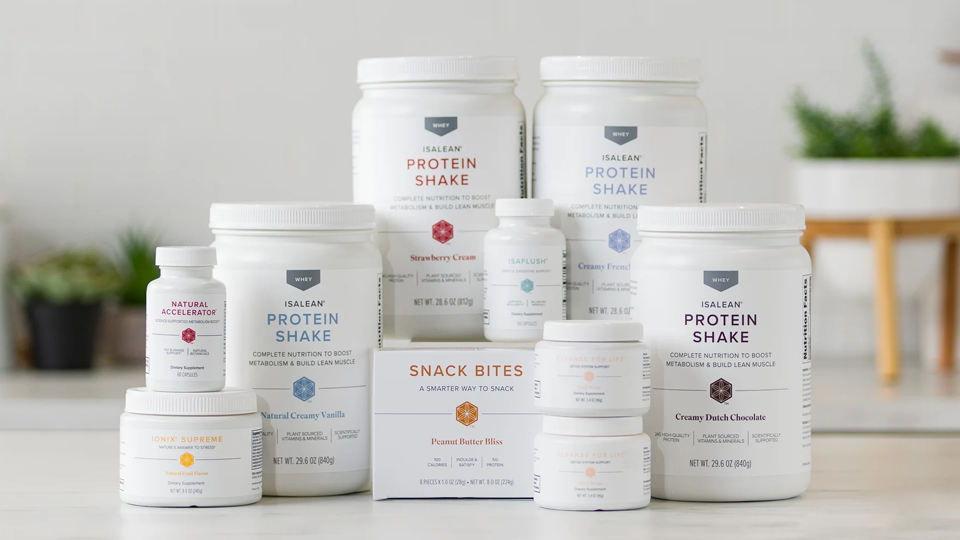
Isagenix seeks to help customers easily avoid common food allergens.
At Isagenix we understand that people who are living with food allergies require accurate food labeling information for making informed choices up front about what Isagenix products they are able to enjoy. For this reason, the company has made a quick-reference table available as a resource to Isagenix customers for more than five years.
Now the company has expanded the table to include recently launched products as well as additional information about more common food allergens in existing Isagenix products.
View the entire story
Category: Products

Lab study is revealing resveratrol's unique actions on human fat cells.
A recent study published in American Journal of Clinical Nutrition is offering new insight on how resveratrol—a naturally occurring plant compound—affects fat cell biology.
Scientists have been researching resveratrol’s effects on fat cells ever since a study in 2006 published in Nature showed it protects lab mice fed a high-calorie diet against weight gain and obesity. The principal hypothesis has been that resveratrol activates a gene called sirtuin 1 (Sirt1), which is also activated by calorie restriction.
View the entire story
Category: Nutrition News

Isagenix products must meet rigorous standards of safety and quality.
An article in the July issue of Consumer Reports magazine has raised concerns regarding traces of heavy metals in protein drinks, which has led to questions about the quality and safety of our IsaLean Shake products.
You can rest assured that Isagenix delivers on its promise to consumers to maintain a “no compromise” quality policy with a strong safety-monitoring program for all our products. Our safety-monitoring program includes microbial, pesticides, and heavy metals testing.
View the entire story
Category: Products

Eating red chili peppers helps with weight loss, suggests study.
Scientists have already known for some time that capsaicin found in cayenne pepper (Capsicum anuum), or red chili pepper, is able to increase fat-burning potential by influencing secretion of adrenal gland hormones. A new study now suggests that this spicy compound may also combat weight gain in other ways by changing the make-up of proteins in fat cells.
Jong Won Yun and his colleagues at Daegu University, of South Korea, who published in April’s issue of Journal of Proteome Research, say they discovered that capsaicin alters proteins in fat cells that lead to markedly increased thermogenesis and fat metabolism, which suggests that this spice commonly used for flavoring foods “may be a useful phytochemical” for battling the bulge.
View the entire story
Category: Nutrition News

Three critical steps for maintaining muscle are strength training, quality protein, and vitamin D and coQ10 supplementation.
Aging is characterized by a decline in muscle mass, or sarcopenia, that nearly doubles at ages 60 and on because of a gradual, accelerating decrease in basal metabolic rate and energy levels combined with increased weakness and frailty. These outcomes only lead to less physical activity creating further reductions in lean body mass replaced by fat mass.
Statistics show that within the next few decades the population of people ages 60 and older is expected to nearly double. Because sarcopenia has a powerful influence on the body’s metabolism and health, one of the most important factors in keeping and staying healthy is preserving skeletal muscle mass and strength.
View the entire story
Category: Diet and Lifestyle

Preserving muscle over time is key for reducing risk of diabetes.
Being overweight is a risk factor for type 2 diabetes; however, a new study shows losing weight alone may not be enough to reduce risk of type 2 diabetes in people with low muscle mass and strength, particularly if they are over the age of 60.
These are the findings of new research from Dr. Preethi Srikanthan of University of California, Los Angeles, and colleagues who performed a cross-sectional analysis of 14,528 people from National Health and Nutrition Examination Survey III.
View the entire story
Category: Nutrition News